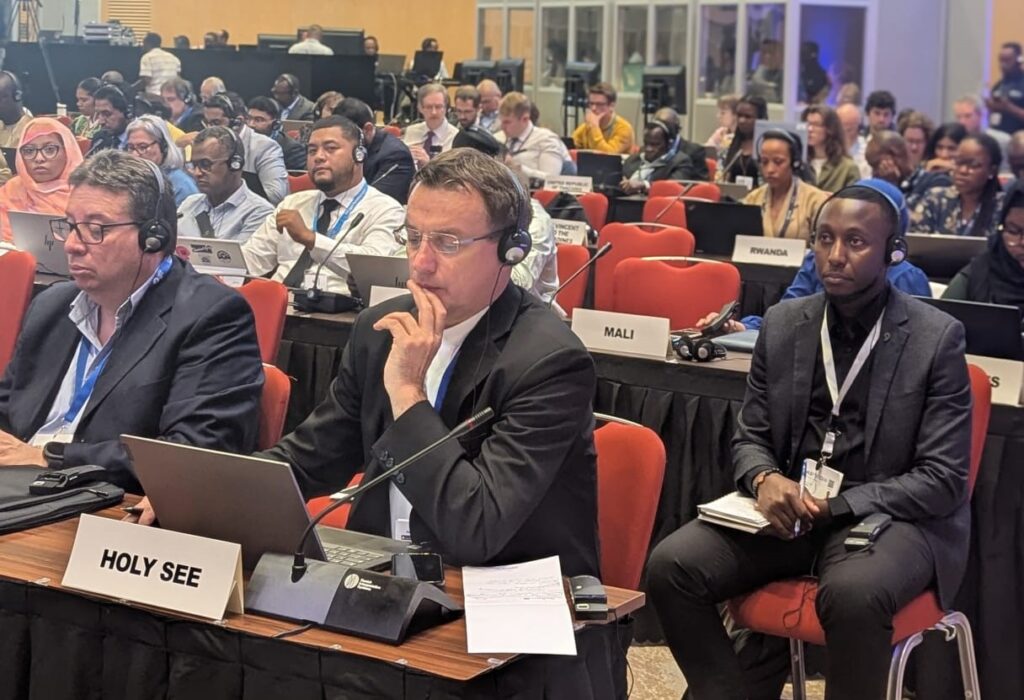
The second day of the MOP38 in Kigali started off with a discussion on the discrepancies in the report presented by the Scientific Assessment Panel (SAP) and the Technology and Economic Assessment Panel (TEAP) held yesterday on the emissions of HFC-23. SAP argued that more than three-quarters of HFC-23 emissions in 2024 derived from atmospheric measurements cannot be explained by reported emissions and other known sources.
The main causes of discrepancy are the results of different methodologies used, delays by parties in sharing emission data, and lack of recording capacity for some countries. SAP recognized an incomplete understanding of the regional contributions to the global HFC-23 emissions. On the other hand, TEAP believes that some of the estimates of HFC-23 emissions are broad to the extent that their accuracy is currently not available.
In other panel discussion, the participants learnt that the Ozone Secretariat, in collaboration with the Advisory Committee of the General Trust Fund for Financing Activities on Research and Systematic Observations Relevant to the Vienna Convention, have teamed up to enhance regional atmospheric monitoring of substances controlled by the Montreal Protocol.
Ten regions and locations were identified by the advisory committee to fill the gaps at the regional levels, and the prioritized regions include Southern Asia (India/ Bangladesh), South-East Asia (Vietnam), Southern Africa (Botswana/South Africa), Middle East (Saudi Arabia), and Central/Southern South America (Brazil/Argentina). Five regions, North Africa (Algeria), North America (Mexico) Northern South America (Ecuador), Eastern Europe (Russian Federation) and West Africa (Nigeria) are not yet fully evaluated.
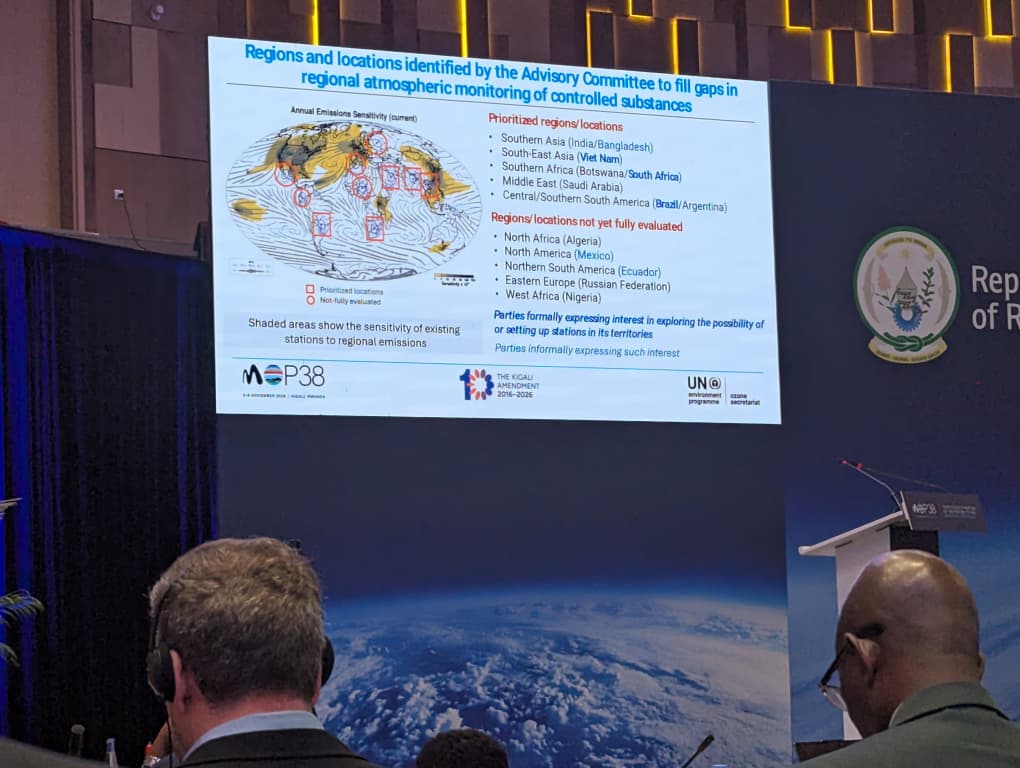
The setting of the atmospheric monitoring stations in territories is done out of the will of the parties. In the regions where stations would be set, the information accuracy of the monitoring of a station would be between 500-1000 km. The monitoring tools will help in producing collective data of countries close to the monitoring station.