First Day
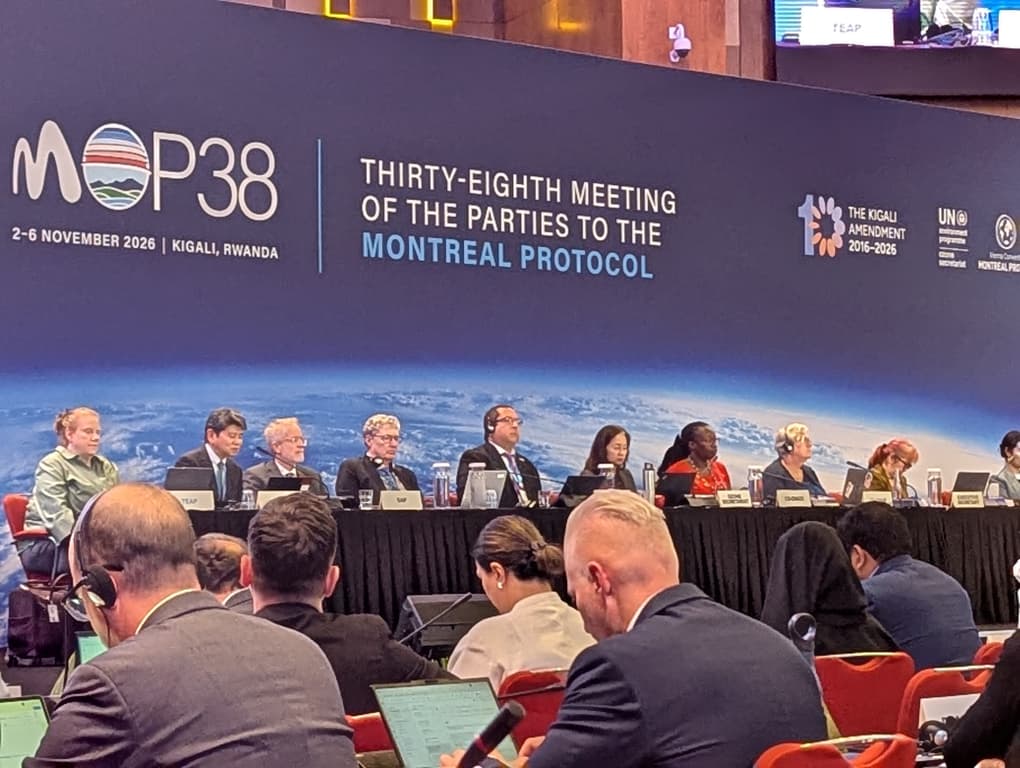
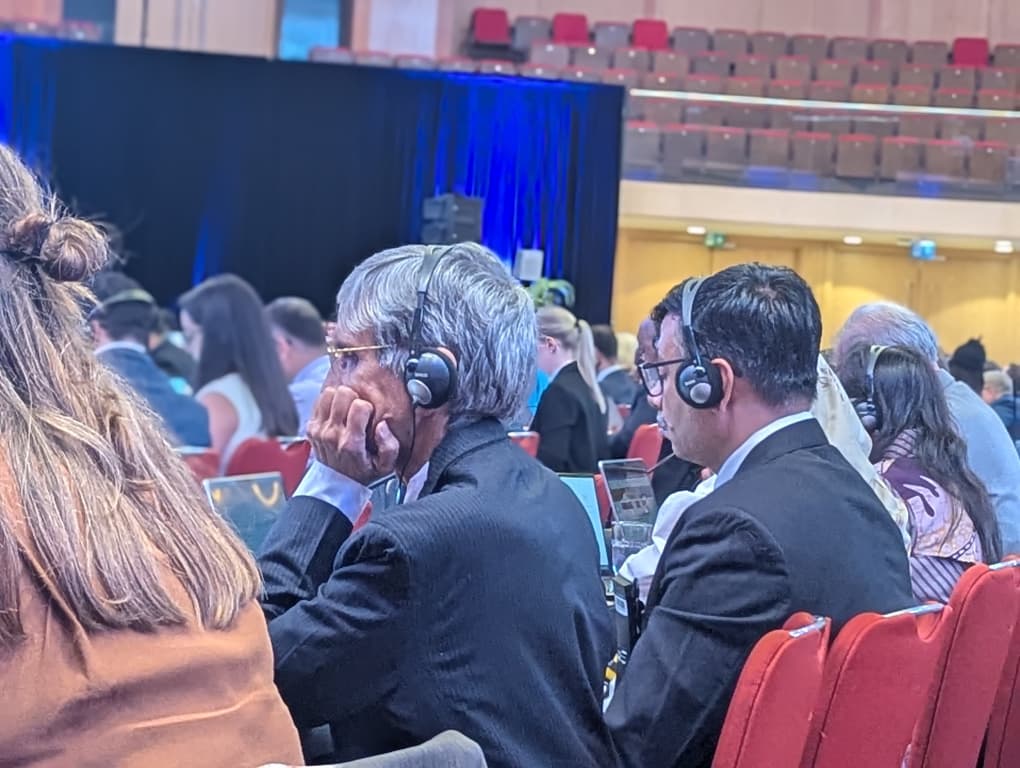
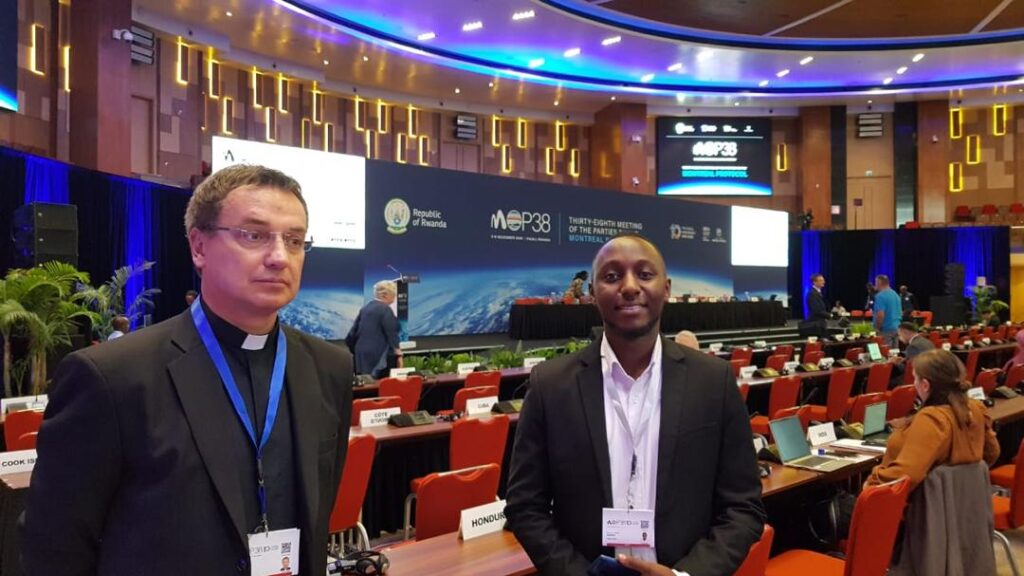
The parties to the Montreal Protocol are holding their 38th meeting at the Kigali Convention Centre. The meeting is a UN environmental programme that talks about substances that deplete the Ozone layer, and it will last for five days, from the 2nd to the 6th of November 2026. Various Country delegates represented their countries in this meeting. In the same vein, the Holy See is represented by His Excellence Mgr. Arnaldo Catalan, Msgr. Daniel Tumiel, and Mr. Bienvenu Eugène RUGIRA, S.J.
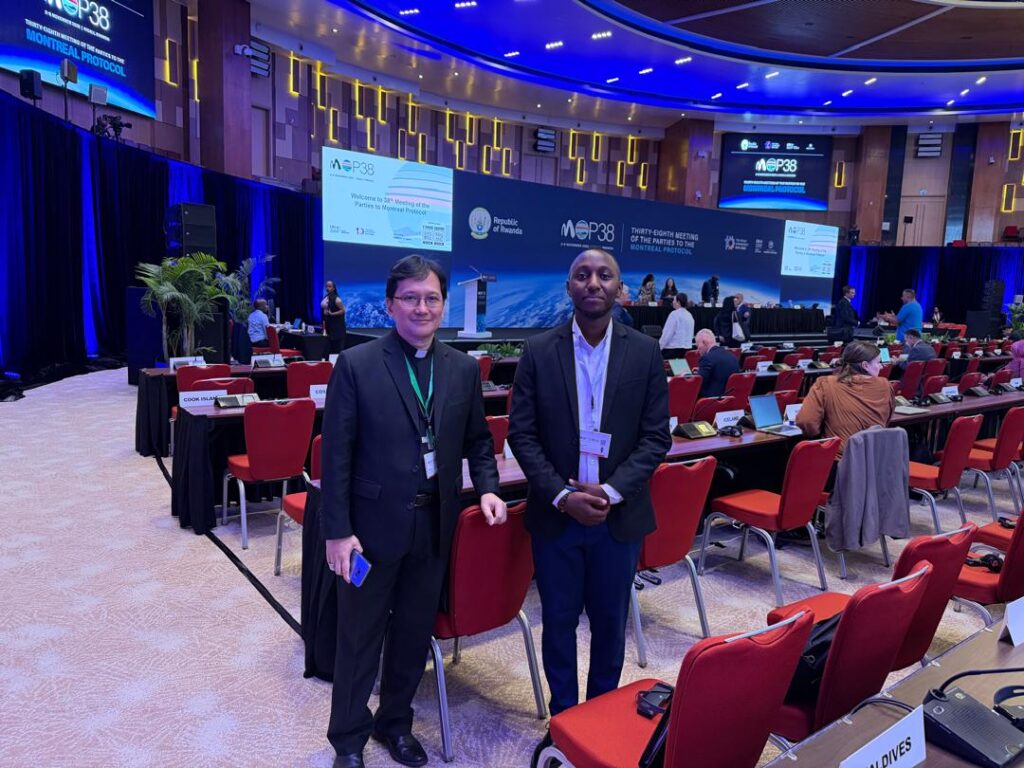
The 38th meeting of the parties to the Montreal Protocol coincided with the celebration of 10 years of the Kigali Amendment to the Montreal Protocol, which is a legally binding international agreement meant to lower the production and consumption of hydrofluorocarbons (HFCs). In the opening their remarks, Ms. Meg Seki, Executive Secretary, Ozone Secretariat, and Hon. Dr. Bernadette Arakwiye, Rwanda’s Minister of Environment, saluted the cooperation spirit that marked the implementation of Kigali amendment of the Montreal Protocol. Ms. Seki emphasized the need to strengthen the Montreal Protocol’s institutions by working smarter and preserving what works well.
The main agenda of the meeting preparatory segments focused on the multilateral fund replenishment for the triennium and the viability of the Montreal Protocol operations (2027-2029). More emphasis was put on the budgeting that should be done based on the actual need and actual cost. The discussion on the viability of the Montreal Protocol operations left the responsibility of effective participation, especially for developing countries, to consultation, constant updates, responsible use of funds, as well as giving the required contribution.
On the emission of HFC-23, the Scientific Assessment Panel (SAP) indicated a drop in its global emissions by 16% from its peak in 2018-2019. The emissions remained unchanged from 2022 to 2024 at 14± 1Kt yr1. However, HCFCs' global production was 20% higher than in 2018-2019. SAP claims that atmospheric measurements of HFC-23 emissions in 2024 show that more than three-quarters cannot be explained by reported emissions and other known sources. As for the Technology and Economic Assessment Panel (TEAP), HFC-23 is consumed for feedstock uses, in very small quantities for uses fire suppression, very low-temperature refrigeration, and semiconductor and electronics manufacturing.